
Monday, 5 December 2016

Tuesday, 29 November 2016

History Of Thriller
Early Thrillers 1920's+1930's
The first ever experimental thriller film made was called 'Safety Last' in Apr 1923 by Fred C. Newmeyer and Sam Taylor. Every other thriller film released after this has elements of this film otherwise they wouldn't be called thrillers.
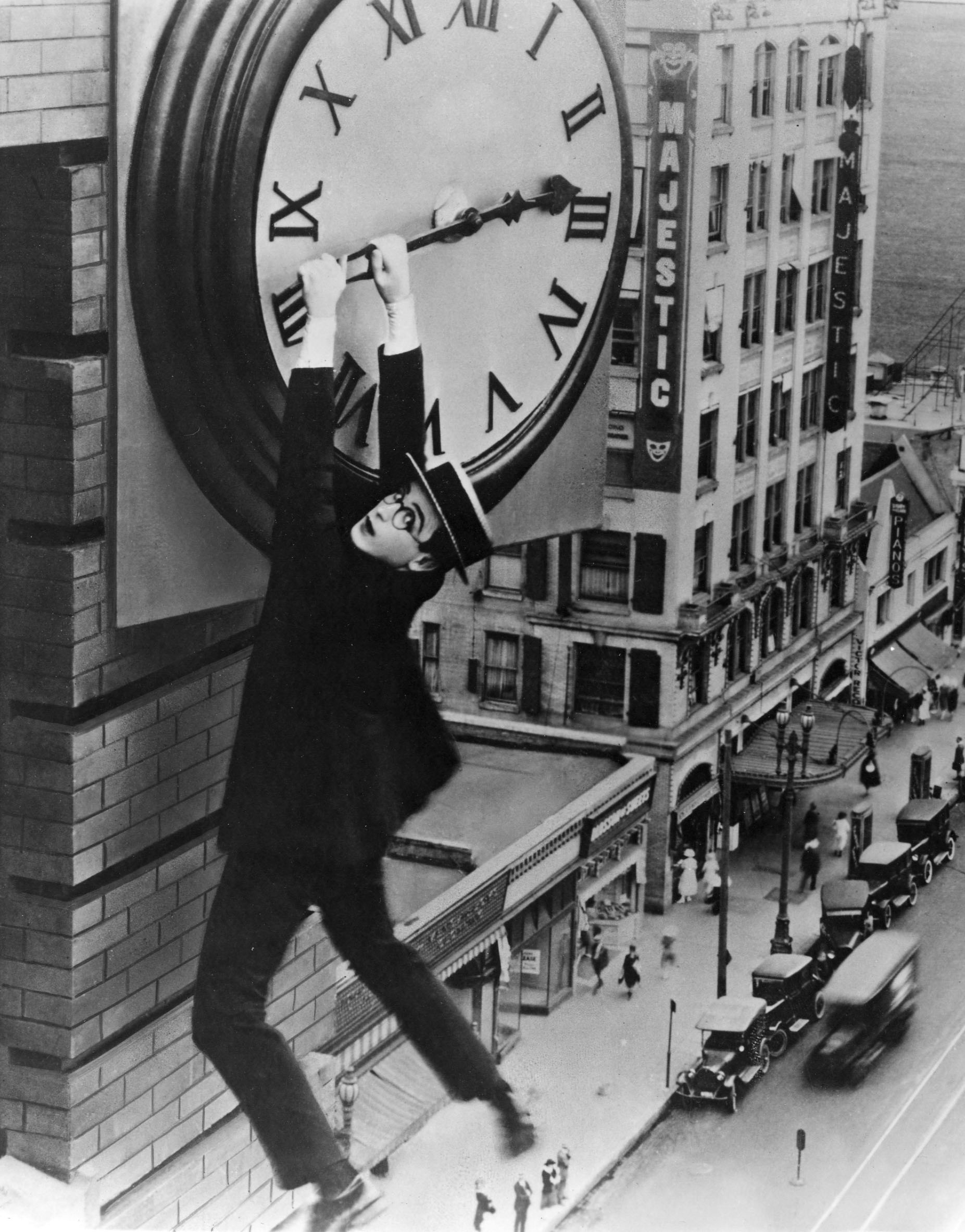
What most people recognise as the first proper thriller film is 'The Lodger' by Alfred Hitchcock in Feb 1927, based on the serial killer Jack The Ripper.

PSYCHO
Psycho, also directed by Alfred Hitchcock is a horror/thriller based on the 1959 novel 'Psycho' by Robert Bloch based on the Wisconsin murder and grave robber Ed Gein. 'Psycho' is one of Alfred Hitchcocks most well known films and at the time set high standards for the thriller genre.

CAPE FEAR
Cape Fear, directed by J. Lee Thompson in 1962 is psychological thriller film and is now considered a classical horror film. It was adapted by James R Webb from the novel "The Executioners" by John D. Macdonald.
1970-1980's
There was a wave of violent thriller films at this time, examples of these include:
-'Frenzy' in 1972 Alfred Hitchcock
-'Frenzy' in 1972 Alfred Hitchcock
-Steven Spielberg 'Duel' 1971
-1980 'Dressed to kill' by Brian De Palma
-1984 'Body Double' by Brian De Palma
1990s-Present

THE SILENCE OF THE LAMBS- 1991
A young F.B.I. cadet must confide in an incarcerated and manipulative killer to receive his help on catching another serial killer who skins his victims. Directed by Jonathan Demme.

SCREAM- 1996
Scream directed by Wes Craven is a Horror/Thriller/Slasher film. Its based on high school student who becomes a target of a mysterious killer. Scream is a deconstruction thriller because of its many subgenres.

THE MOMENTO- 2000
A man juggles searching for his wife's murderer and keeping his short-term memory loss from being an obstacle. Directed by Christopher Nolan.

THE PRESTIGE- 2006
Two stage magicians engage in competitive one-upmanship in an attempt to create the ultimate stage illusion. Directed by Christopher Nolan.

BLACK SWAN- 2010
A committed dancer wins the lead role in a production of Tchaikovsky's "Swan Lake" only to find herself struggling to maintain her sanity. Directed by Darren Aronofsky.

Monday, 28 November 2016
First 3 minutes
First 3 minutes
Thriller
Starts off as a close up shot of a girl’s (Alice O’Brien’s)
face. She appears to be drained, tired, with bloodshot red eyes and blotched
skin as if she’s been crying. The next shot shows her location; she is in an
office room in her own home, it’s painted white and doesn’t appear to be very
homely, there’s a pin board with cases on it, a desk with a houseplant and a
photo frame with a picture of what seems to be her family in it as well as a
record player and vinyl’s arranged in a messy pile. She is dressed in a baggy,
stained jumper and leggings and her hair is slightly matted.
The girl, with a quivering hand, places a record on the
record player, it plays an old jazz song. The shot goes back to her face and
she closes her, eyes, a tear falls down her faces and she begins to shake.
A voiceover (the voice of the girl) starts to set the scene
“I had studied as a physiologist for 5 years, I earned my degree, a first- top
marks. I was renowned my studies, respected in my workplace- but I’ll tell you
on damn thing, nothing prepares you for this.”
The shot goes to a blackout, and immediately shows a whole
new setting. The scene seems to be garage, lit only by a single blub hanging
from the ceiling that constantly flickers, adding to the effect of the
atmosphere. O’Brien is tied up to a chair, the light flickers off. When it
turns back on, a man grabs the chair across the floor while she screams in
fear. The next shot shows his face- he is wearing skull makeup covering his
identity and a black and white suit with a flower in the pocket- she recognises
him as H, her insane patient who escaped from the prison she was working
at.
He has a smug yet furious expression and she knows she’s in
danger. He explains to her that for the past week since he escaped, he was been
watching and ironically ‘studying her’- knowing her address, her family her
daily routines. He is now into her head and the roles seem to have reversed. (Shots
go to flash backs she has of seeing him across, him seeing her in cars, on her
opening the door to an unexplainable bouquet of roses on her doorstep.) He
pulls out a knife and holds it close to her face, explaining that if she doesn’t
do exactly as he says, becoming a member of his devious gang, her family, herself,
and every little aspect of her life will be destroyed. The scene cuts to different
shots of H and his followers, starting fires and robbing shop, each have a
skull branded and their wrists.
The scene goes to a black out again, it shows the first the original
scene of O’Brien in her own home “nothing is the same” she says. She removes
the record from the player, her sleeve falls back to reveal her the signature
mark of the skull on her wrist. “Nothing is the same” the voiceover repeats,
her voice breaking slightly.
Goes to black and cuts to title sequence.
Friday, 25 November 2016
Continuity In Film
Media Studies
Continuity in Film
- Continuity in film is the consistency within media of
characteristics of people, plot, objects and places, camera angles seen by the
viewer over a period of time.
Rules
of Continuity
- 180° line of action
|

The 180° rule is a cinematography rule that states that two characters
in a scene should maintain the same left/right placement to each other as to
not confuse the audience. The line of vision between the two characters is the
guide that should not be crossed otherwise creating a reversed shot.
Keeping movement or actions flowing through cuts/edits to
make them less noticeable, making sure they match.
- Shot Reverse Shot
This is a film technique where one character is shown
looking at another character, and then the other character is shown looking
back at the first, creating the illusion the characters are looking at each
other while deemphasizing the transitions between shots.
Examples of Continuity Mistakes in Films
-Commando (1985)
After chasing down the character Sully, the yellow Porsche is totally
wrecked on the left side, until the character Arnie drives it away and it is
completely fine.
Three Minute Storyline
Storyline
A boy named Dan is waiting for at a train station in the dark
because his train is delayed. The train station is desolate on both sides of
the tracks except for a mysterious looking figure, dressed all in black on the
opposite side. Dan doesn’t think much of the man at first, but he begins to
feel more and more uncomfortable as the man begins to stare at him. The man
then starts to walk to the stairs that leads to his platform. Instinctively Dan
watches where the man is walking and stands up when he realises where he is heading.
The man begins to speed up to the Dan’s side of the platform and so Dan begins
to hurry to the stairs that lead to the exit. He gets to the top of the stairs
and pauses, looking at the stairs that the figure was heading towards. For a
moment no one is there, and then the man appears round the corner. Dan begins
to run off the platform and while looking back, runs into another older boy. He
apologises to the other boy and carries on going, until he hears a shout of pain.
He looks back and sees the hooded figure stabbing the older boy. The older boy
falls to the floor. As the man looks up, his hood falls off, and his face is
revealed. The hooded figure then seems to get annoyed because of his plans gone
obviously array and begins to run away in the other direction. Dan watches the
man walk away in haste, trying not to draw attention as more people are now
arriving on the platform. As he is walking, he passes a woman walking past, and
as he crosses her, he touches her shoulder. The woman looks back in annoyance
and stops in shock. The man who had tapped her was now walking away, but was no
longer a man, but looked exactly the same as the woman who’s shoulder he
touched.
Full Storyline
Full
Storyline
A 17 year
old named Dan is waiting for a train late at night, when he begins to get
suspicious of a hooded figure. After being chased off the platform, the
mysterious man kills an older boy who got in his way, while accidentally
revealing his identity. The killer then runs from the scene, and on the way,
somehow changes his appearance in a matter of seconds to match a woman he
passed in the street.
Dan rang
his dad and told him what happened, and his dad picked him up 20 minutes later.
He took Dan to the police station that night but before told Dan not to mention
anything about the man shapeshifting. News headlines were already been shown on
the TV in the station of the older boy who had been killed.
His dad his
took him home and Dan went to bed early but didn’t sleep all night. Why did the
man come after him? Was it because he was just in the wrong place at the wrong
time or was it something else? A week went by and both his mum and dad were
getting sick and tired of hearing the ‘made up’ story of a shapeshifting
killer, and decided that Dan had been mentally affected by the event and
decided to send him to therapy to see if he can get some help. Session after
session of therapy went by of being told he made it up in his head, and with no
sign of the shapeshifting man, Dan started to belief he was actually going
crazy.
That was
until one day when he was at school, and life was finally starting to seem
normal again, Dan got a text message from his mum saying it was an emergency
and he needed to come home. This was strange, because his mum was a very
‘unaware’ when it came to technology, his mum didn’t like texting and at a push
would ring, otherwise his dad would do all the contacting. So this must have
been an emergency.
Dan got the
next bus home and ran to the front door. He got his keys out, opened the door
and ran into the front room. Silence. He called out for his mum and there was
no answer. He ran into the kitchen and his ‘mum’ was stood at the sink. ‘What
the emergency?’ Dan asked. ‘Oh sorry dear, false alarm.’ Dan knew his mum was
acting strange, from the way she moved, talked, even how she pronounces her
words, something was different. Then she went to put one of the clean plates
and turned to Dan. “Could you just get some bread out of the pantry?” Dan left
the room and went into the hall to go into the pantry. When he went to open the
pantry door, a sudden bang came from the broom cupboard. He slowly went to the
door and hesitantly reached for the handle. He swung open the door and there
was his mum on the floor, hands and legs tied and mouth taped up. Dan looked at
his mum in disbelief, he backed up astonished, and the mirror in the hall
caught his eye. Behind him a tall black figure was getting closer, with a sharp
shadow in its hand.
3 Minutes
Storyline
3 minutes beginning of the film
Set in a dark isolated forest, clearly night time. “Amy” a
young adult is seen hiding behind a tree, breathing fast and heavily, looking
around her surroundings every 3 seconds looking agitated and fearful, her lip
quivering as she unlocks her phone, her hands shaking. A close up of the phone
sees her trying to ring her boyfriend, but no one picks up. She now frantically
looks around the woodland, an eyeline shot revealing a dark figure in the
distance, Amy starts to run. Now running away in hysterics from the figure, Amy
is tripping over tree trunks and roots of the trees surrounding her, trying to
get away desperately. There are fast cuts of close-ups of her face, long shots
of her running towards the camera and the scenery behind her as she keeps
looking back. Amy is screaming and heavily breathing as she runs for her life.
Amy has cuts on her face where she has ran through bushes, cutting her on her
way through. She keeps looking behind her, the camera following her with
eyeline shots, showing a dark figure running after her holding ropes and a
knife covered with blood. The camera cuts back to a long shot of the girl
running, crying as she does so, suddenly she trips over an uprooted tree
falling to the floor, she screams with agony the hooded man coming closer to
her now walking towards her as she struggles to crawl away, her hand grabbing
her thigh, blood pouring out of the wound. The man gets closer as Amy screams
for help. The camera is set on the ground, a close up to Amy’s face showing the
man behind her, the man grabs Amy’s legs and drags her away from the camera,
she screaming and grabbing the ground to try and fight against him, a close up
of her engagement ring is seen, the soil covering her hands and face as the
camera loses focus gradually going to black.
Friday, 18 November 2016
Film Continuity
Film Continuity
Film Continuity; The way a film is made to provide continuous
and clear movements of events during a film, making sure cuts are edited
together in chronological order and keeping location and props the same between
cuts, allowing the film to flow and the audience to not get confused.
180 degree line of action
This is a
basic line of action between 2 characters, or objects, usually used during a
conversation between the two. This 180 degree line makes sure the camera is
kept on one side of the axis for each shot in the scene, the line is usually
imagined running from one character to the other, linking them and carrying on
throughout the location of the scene. The camera stays on one side of the line
to make sure the location of the characters is consistent between shots, not
confusing the audience of the special relationship between the characters and
in the scene. If the 180 degree line were to be broken, the audience would be
disorientated throughout the scene, showing the characters switching sides of screen
and the background’s behind them changing throughout each shot. The line of
action prevents this so the scene flows nicely with no confusion of where the
characters are stood in the scene.

Shot reverse shot
This
technique is used with the 180 degree rule between two characters, separately
cutting to close ups of the two characters faces as they speak in conversation
with one another, switching between the two to catch reactions and their
speech.
Match on action
This is an
edit of film where a cut is seen in the middle of an action, to another shot
where that action is continued, the action matching on both cuts. E.g. a woman
grabbing a handle of the door and pushing it open, cutting to the woman
finishing that push of the door an entering the room from the other side.
Subscribe to:
Posts (Atom)